Water damage guide
Signs of Hidden Water Damage: What to Look For
Water damage is not always a puddle on the floor. Moisture can move behind drywall, under flooring, above ceilings, around plumbing, or into cabinets and other building materials before the full extent is visible.
A stain, odor, or warped finish does not prove exactly what is happening inside a wall or floor. But some patterns are useful warning signs that a moisture source should be investigated rather than ignored.
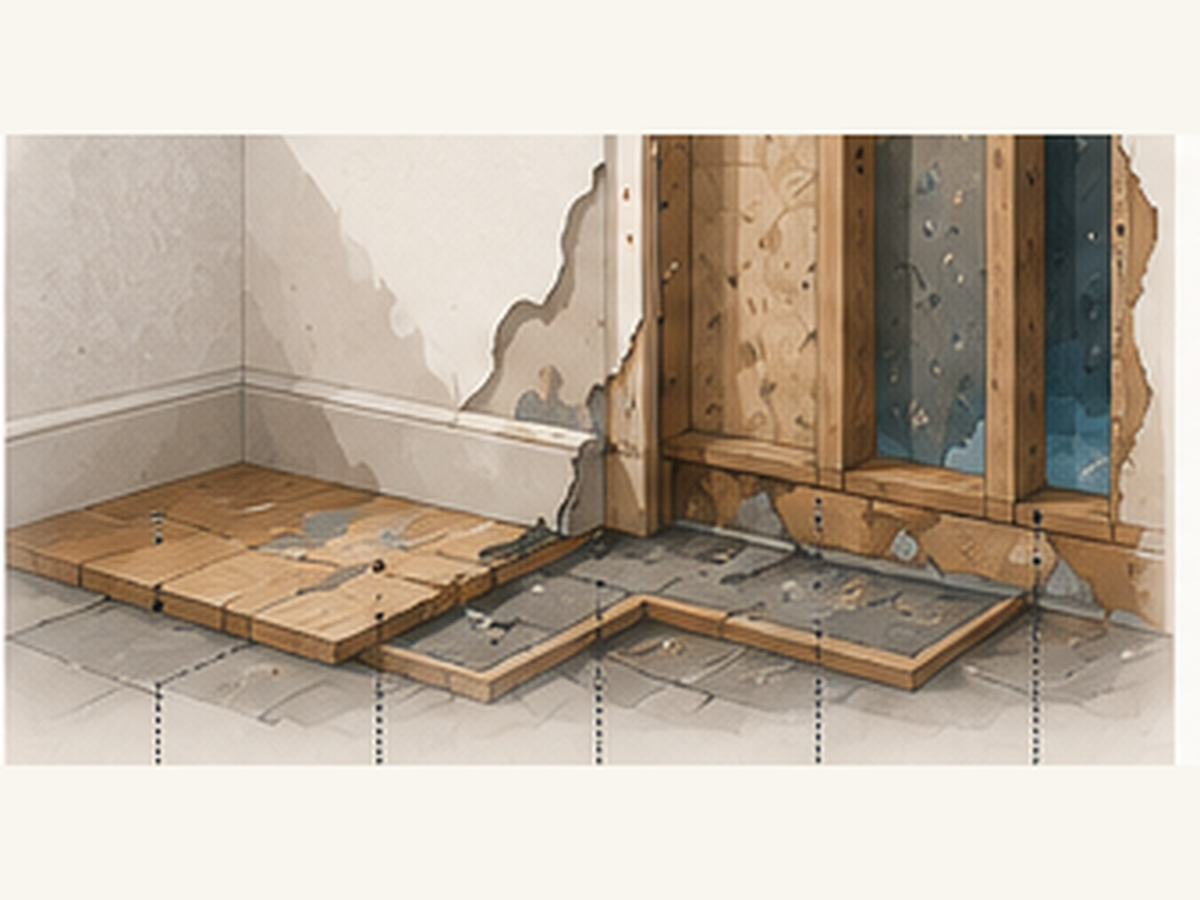
Water stains or unexplained discoloration
Brown, yellow, gray, or darker patches on ceilings and walls can appear after water has moved through a material and dried at the surface.
A stain may come from a roof leak, plumbing leak, condensation, or another moisture source. The location alone does not identify the exact cause, but a new stain — especially one that grows, darkens, or returns after rain or water use — is a reason to look for an active source.
The EPA specifically lists water damage and stains among common indicators of moisture problems.
Peeling, bubbling, or buckling paint
Paint and other finishes can change when moisture reaches the surface or the material behind them.
Possible clues include:
- peeling paint;
- bubbling or blistering finishes;
- wallpaper that begins to lift;
- swollen trim;
- delaminating materials; or
- a wall surface that changes shape.
EPA’s Mold House guidance uses buckled and peeling paint as an example of water from a roof leak moving into a wall.
Do not simply paint over an area that is still wet. Fix the moisture source and allow the material to dry appropriately first.
Warped, swollen, or changing wood and flooring
Wood and wood-based materials can react to moisture by swelling, warping, cupping, or changing at joints and edges.
Flooring may also develop:
- lifted edges;
- gaps or buckling;
- soft or spongy areas;
- staining near baseboards;
- recurring dampness; or
- adhesive failure under certain floor coverings.
These symptoms do not tell you how much of the assembly is wet, but they can indicate that moisture has reached beyond the visible finish.
A persistent musty odor
A persistent musty or moldy odor deserves attention, particularly when there has been a known leak or water event.
The EPA notes that a moldy odor can suggest mold growth and should be investigated. Odor alone cannot tell you where the moisture is coming from or how large the affected area is.
The practical question is: what moisture source is allowing the odor or damp condition to persist?
Damp spots that keep returning
A wet spot that dries and then returns is different from a one-time surface spill.
Recurring dampness can point to:
- an intermittent plumbing leak;
- roof or exterior water entry;
- condensation;
- drainage problems;
- moisture moving through porous materials; or
- another source that has not been corrected.
Try to note when the dampness appears. Does it follow rain? Use of a particular fixture or appliance? A change in indoor humidity? That timing can help narrow what needs to be investigated.
Condensation in places that should normally stay dry
Condensation on windows or cold pipes can result from humidity and temperature conditions rather than a plumbing leak. But frequent condensation, damp wall areas, or moisture around building assemblies can still create a problem if materials stay wet.
The EPA lists condensation and high indoor humidity among moisture conditions worth investigating.
One symptom does not automatically mean “hidden water damage.” The pattern, persistence, and source matter.
Where hidden moisture can collect
Moisture problems are often harder to see in:
- wall cavities around plumbing;
- the back side of drywall, paneling, or wallpaper;
- beneath carpet and padding;
- under or behind cabinets;
- ceilings below roof or plumbing penetrations;
- flooring and subflooring;
- areas behind furniture where air movement is limited; and
- HVAC or condensate areas.
EPA guidance specifically notes that hidden moisture and mold can occur behind drywall, wallpaper, paneling, beneath carpets and pads, around pipes inside walls, and above ceilings.
What these signs cannot tell you
A visual clue can tell you that something deserves attention. It cannot reliably tell you:
- the exact source of the water;
- how far moisture has traveled;
- whether a material can be saved;
- whether mold is present behind a surface;
- whether structural damage has occurred; or
- what repair scope is needed.
Those questions depend on the actual property and conditions.
If you suspect hidden moisture after a recent incident, start with the first steps after water damage. If the issue appears to require removal, drying, or repair, see the main water damage restoration help page for Lancaster.
When to investigate further
Consider a more thorough assessment when:
- stains or dampness keep returning;
- a leak source is not obvious;
- paint or materials continue to swell or deteriorate;
- flooring changes shape;
- a musty odor persists;
- water entered a wall, ceiling, cabinet, or floor assembly;
- the area stayed wet for an extended period; or
- you are not confident that the affected materials dried completely.
EPA guidance recommends drying water-damaged areas and items within 24–48 hours when possible to reduce mold-growth risk. Hidden moisture makes that goal harder because the surface may appear dry while another layer remains damp.
When signs point to an unresolved water problem
If signs at a property in Lancaster point to an active or unresolved water problem, call and describe the location, the visible signs, and whether they are recurring or changing.
Frequently asked questions
Does a water stain mean there is still an active leak?
Not necessarily. A stain can remain after an older event. But a stain that grows, returns, feels damp, or changes after rain or water use is a reason to investigate the source.
Does a musty smell prove there is mold?
No. A musty or moldy odor is a warning sign worth investigating, but an odor does not determine the location or extent of a problem.
Can hidden water damage be behind a wall with no visible stain?
Yes. Moisture can occur behind drywall or paneling and around pipes inside wall cavities. The absence of a visible stain does not rule it out.
Should I open a wall myself to check?
Do not begin destructive investigation without considering electrical, plumbing, contamination, and repair risks. The safest approach depends on the location and circumstances.
Move from investigation to restoration help
When hidden moisture at a Lancaster property is part of broader water damage, call to discuss the affected areas and possible water removal, drying, or repair needs.