Water damage guide
Water Mitigation vs. Restoration: What’s the Difference?
After water damage, several terms can appear in the same conversation: mitigation, extraction, water removal, drying, remediation, restoration, and repair.
They are related, but they do not always mean exactly the same thing. Companies, insurers, estimates, and standards may use the terms somewhat differently.
A useful way to understand them is by the function of the work rather than by treating each label as a separate service.
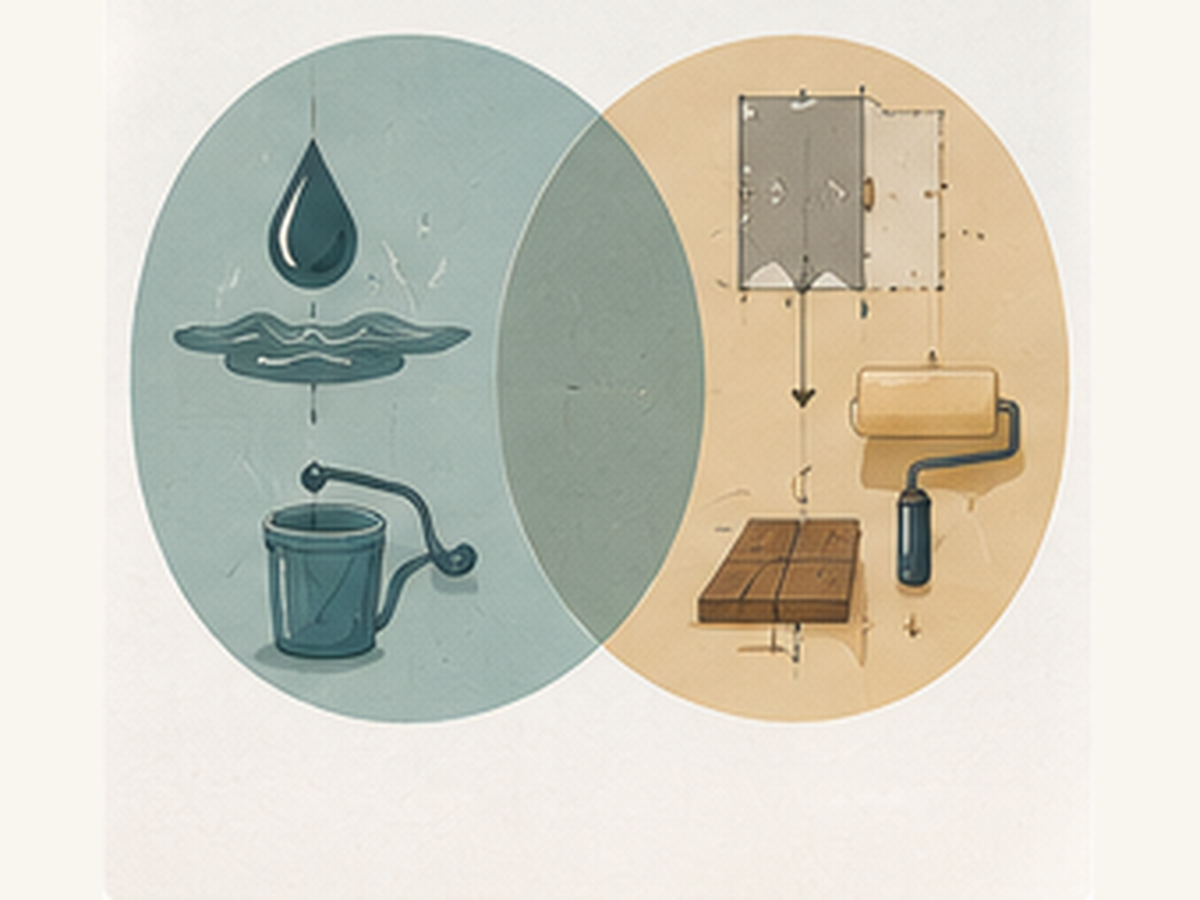
Quick comparison
Water mitigation generally refers to immediate measures intended to limit additional damage and stabilize the situation.
Water extraction or removal is the physical removal of standing or excess water.
Drying and dehumidification address moisture that remains in materials and the surrounding air after visible water is removed.
Water damage restoration is the broader effort to return affected areas toward a usable pre-loss condition, which may include removal, drying, cleaning, and repair or replacement of damaged materials.
The boundaries can overlap. The actual scope on an estimate matters more than the marketing label.
What does water mitigation mean?
In practical terms, mitigation is about preventing a bad situation from getting worse.
Depending on the loss, mitigation-related actions might include:
- safely stopping the water source;
- protecting unaffected areas or contents;
- removing standing water;
- beginning controlled drying;
- removing materials that cannot remain in place safely or effectively; and
- taking reasonable temporary steps to prevent additional damage.
Not every incident needs the same steps, and this website does not prescribe a property-specific mitigation plan.
If the loss just happened and you are still deciding what to do first, start with what to do after water damage.
Where do water extraction and water removal fit?
“Water extraction” and “water removal” are often used for the step where excess or standing water is physically removed.
Extraction is important, but removing visible water does not automatically mean the building is dry.
Water can remain in:
- carpet and padding;
- flooring and subflooring;
- drywall;
- cabinets;
- wood;
- insulation; and
- other porous or layered materials.
Water extraction is one function inside the broader water-damage path, not proof that drying or repair is complete.
What happens after extraction?
After excess water is removed, the focus shifts to remaining moisture.
Drying can involve airflow, dehumidification, removal of water-damaged materials when appropriate, and monitoring the condition of affected areas. The exact methods depend on the property, materials, source of water, and scope.
The U.S. EPA recommends drying water-damaged areas and items within 24–48 hours when possible to reduce mold-growth risk.
If you suspect moisture remains even though the surface looks dry, see signs of hidden water damage.
What does restoration mean?
Restoration is broader than simply removing water.
A restoration scope can include some combination of:
- identifying and addressing the water source;
- assessing affected areas;
- extracting excess water;
- drying wet materials and spaces;
- cleaning affected areas where appropriate;
- determining what can be restored; and
- repairing or replacing materials that cannot be adequately recovered.
One company does not necessarily perform every step. The written scope should identify what work is included by the provider handling the job.
For the broader next-step path, see water damage restoration help in Lancaster.
Where does repair fit?
Repair is the part of the work that deals with physical damage that remains after the moisture problem is controlled.
Examples can include drywall, trim, flooring, cabinets, or other building materials. Whether something can be repaired, restored, or needs replacement depends on the actual condition.
Water damage repair therefore belongs within the broader restoration process, even when later repair work is handled as a separate phase.
Why the terminology can be confusing
There is no guarantee that two contractors, insurers, or estimates will use the same labels in the same way.
One estimate may put extraction and drying under “mitigation.” Another may describe those steps under “water damage restoration.” A third may separate emergency services from later repairs.
Instead of comparing only headings, compare the work being proposed.
How to read a water-damage estimate
Look for clarity on:
- what areas are included;
- what water is being removed;
- what materials are affected;
- what drying work is included;
- what demolition or removal is proposed;
- what cleaning is included;
- what repairs or replacement are included;
- what is excluded;
- whether later repair work is a separate phase; and
- how changes in scope are handled.
If price is your main question, our water damage restoration cost guide explains why published numbers vary and how to separate a general online range from a real property-specific quote.
Frequently asked questions
Is water extraction the same as restoration?
No. Extraction is one function — removing excess water. Restoration is broader and may include extraction, drying, cleaning, assessment, and repair.
Is mitigation the same as drying?
Drying can be part of mitigation, but mitigation is a broader concept focused on limiting additional damage and stabilizing conditions.
Is water remediation the same as restoration?
The terms are sometimes used interchangeably in consumer content, but usage varies. Read the actual scope of work rather than assuming a label guarantees a particular set of steps.
Does every restoration job include reconstruction?
No. The need for repair or reconstruction depends on what materials are damaged and whether the provider actually offers that work. Do not assume it from the word “restoration.”
Ask about the work included
If a water-damage situation at a Lancaster property needs removal, drying, or repair, call to describe what happened and ask what work may be included in the restoration scope.