Water damage guide
What to Do After Water Damage: A Practical First-Step Guide
Water damage creates two problems at once: you need to protect the property, but you also need to avoid making a wet, electrically unsafe, or contaminated area more dangerous.
The best first step is not to rush into cleanup. Start with safety, identify the source if you can do so without entering a hazardous area, document what happened, and then decide how much removal, drying, and repair the situation may require.
First, make sure the area is safe
Standing water and electricity are a dangerous combination. The CDC advises never turning power on or off, or using an electrical tool or appliance, while standing in water. If you would have to enter standing water to reach the main electrical switch, do not do it; use a qualified electrician instead.
Stay out of any area with obvious electrical hazards, structural damage, downed power lines, or another condition that makes entry uncertain.
If the water came from flooding rather than a localized leak or overflow, treat it as a different safety situation. Floodwater can contain debris, germs, chemicals, sewage, or electrical hazards. See our flood damage restoration guide for Lancaster for the flood-specific decision path.
Stop the water source — only when it is safe
If the source is a plumbing fixture, appliance connection, or supply line and you can reach the appropriate shutoff safely, stopping the incoming water can limit additional damage.
Do not take an electrical or fall risk just to reach a valve. If the source is unclear, hidden, or tied to a larger plumbing problem, the priority is to keep people away from the affected area and get the right type of help.
Document what happened
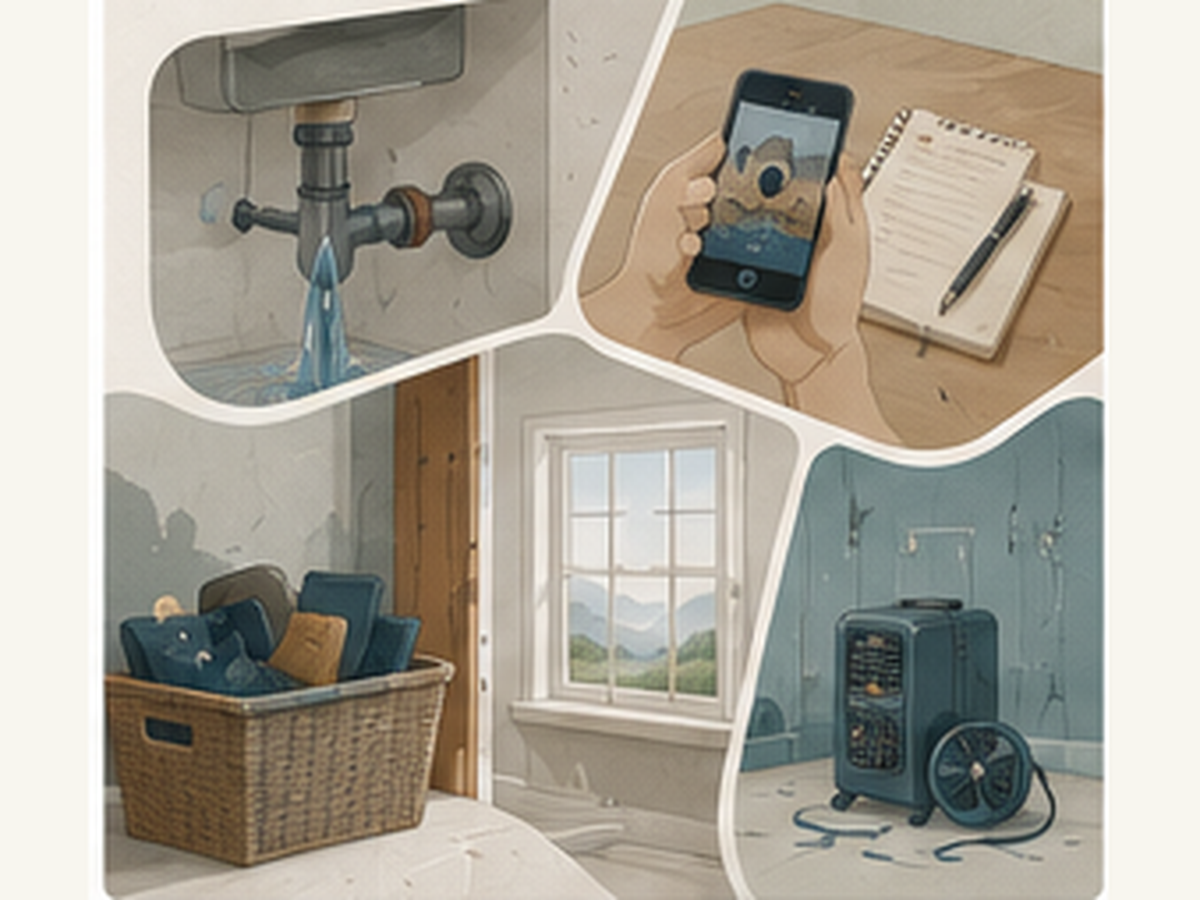
Before extensive cleanup or disposal, take clear photographs or video when it is safe to do so. Capture:
- the apparent source of the water;
- the areas and materials that became wet;
- visible damage to floors, walls, ceilings, cabinets, or contents;
- affected personal property; and
- any temporary measures you take to prevent further damage.
Keep receipts for reasonable materials or temporary protective work. Protect the property from additional damage only when it can be done safely, and keep a clear record of the condition and any temporary steps you take.
Documentation can make the condition of the property and the sequence of events easier to explain.
Limit additional damage without taking unsafe risks
Reasonable temporary steps can help, but safety still comes first.
Depending on the situation, that may mean moving dry, easily handled belongings away from a wet area, placing a container under an active drip, or covering an opening that is letting in rain — but only if the task can be done without entering a dangerous area or performing a risky repair.
Avoid making major permanent repairs before the damage has been properly assessed.
Start drying promptly
Removing visible water is only part of drying a building. Water can move into carpet backing, flooring, drywall, cabinets, insulation, and other porous materials.
The U.S. EPA continues to recommend drying water-damaged areas and items within 24–48 hours when possible to reduce the chance of mold growth. That does not mean every wet material can be saved. Some items may need different treatment or replacement depending on how wet they became, how long they stayed wet, the source of the water, and whether they can be adequately cleaned and dried.
If you still see staining, buckling, dampness, or a persistent musty odor after the visible water is gone, read our guide to signs of hidden water damage.
Decide whether the situation is beyond a simple DIY cleanup
A small amount of clean water on a hard, accessible surface is not the same problem as water that has spread into walls, flooring, ceilings, cabinets, insulation, or several rooms.
Consider professional assessment or restoration help when:
- standing water is extensive;
- the affected area includes electrical components;
- the source is not clear or cannot be stopped safely;
- water has moved into building assemblies or porous materials;
- drying the area completely is uncertain;
- the water may be contaminated;
- the damage continues to spread or reappear; or
- repairs may be needed after removal and drying.
If your situation is a leak, burst pipe, overflow, or other general water-damage event, see water damage restoration help in Lancaster for the broader removal, drying, and repair path.
When the cleanup is beyond a simple spill
If water at a Lancaster property has moved into building materials or cannot be dried safely, call and describe the source, the areas it reached, and what still appears wet.
Is this ordinary water damage or a flood?
The source matters.
A localized plumbing leak, appliance overflow, or burst pipe generally belongs to the broader water-damage restoration path.
A flood or inundation event can involve standing surface water, wider contact with belongings and building materials, uncertain contamination, re-entry decisions, and different safety, cleanup, and restoration questions. In that situation, use the flood damage restoration page instead of assuming the cleanup is the same as an ordinary leak.
What not to do after water damage
Avoid these common mistakes:
- Do not enter standing water to reach an electrical switch.
- Do not operate wet electrical equipment.
- Do not assume floodwater is clean.
- Do not paint over damp or water-damaged walls before the moisture problem is resolved.
- Do not assume a surface is dry because it looks dry.
- Do not promise yourself that every wet material can be saved.
- Do not discard important damaged property before documenting it when documentation can be done safely.
Frequently asked questions
Should I turn off the power after water damage?
If electrical circuits or equipment are wet or near water, power may need to be shut off. But the CDC specifically says not to enter standing water to reach the main switch and never to switch power on or off while standing in water. If the switch cannot be reached from a dry location, use a qualified electrician.
How quickly should wet materials be dried?
EPA guidance recommends drying water-damaged areas and items within 24–48 hours when possible to help prevent mold growth. The actual drying method and whether a material can be saved depend on the material and the extent of the damage.
Should I throw damaged items away immediately?
Not automatically. Document the damage first when it is safe. Some materials can be dried or cleaned; others may not be recoverable.
When is water damage too much for DIY cleanup?
There is no single square-foot threshold that fits every situation. Electrical hazards, contamination, hidden moisture, widespread saturation, an unclear source, or the need for repair are all reasons to avoid guessing and consider qualified help.
Request help after water damage
After immediate hazards are controlled, call about water removal, drying, or repair needs at a Lancaster property and explain which materials and rooms appear affected.