Water damage guide
How Much Does Water Damage Restoration Cost in 2026?
There is no single price for water damage restoration.
Cost data reviewed: August 26, 2026.
The cost can be a few hundred dollars for a small, limited problem or many thousands for water that affects multiple rooms, difficult-to-dry materials, or significant repair work.
Current 2026 consumer cost guides illustrate that spread — and they do not all publish the same average.
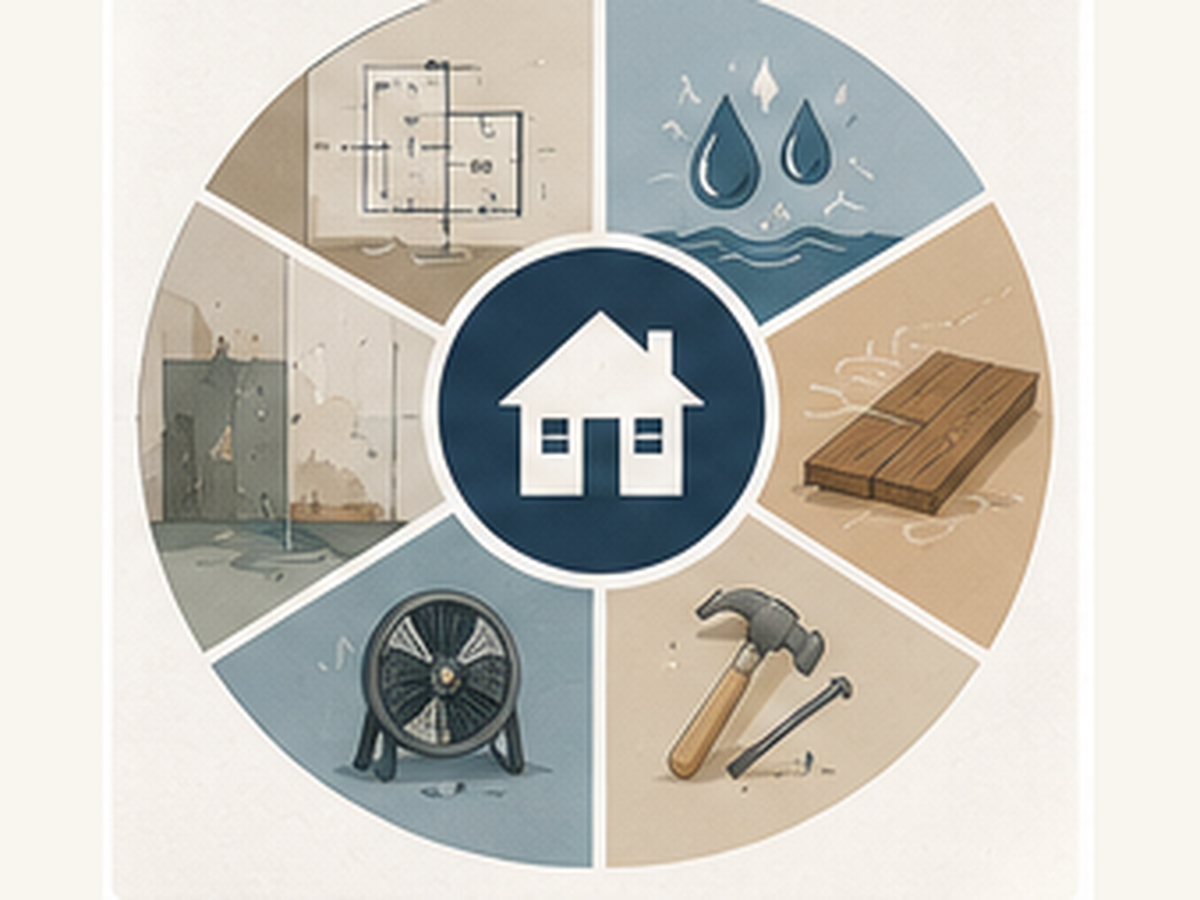
Current 2026 published cost ranges
As of August 2026:
- Angi, updated August 3, 2026, reports a national average of about $3,868, with published project costs ranging from about $450 to $16,000.
- SERVPRO, in a July 2026 cost guide citing Angi’s 2026 data, reports a similar national average around $3,865 and the same broad $450–$16,000 context.
- HomeGuide, updated February 6, 2026, reports an average project range of roughly $2,000–$6,000, while noting that severe losses can extend much higher.
Those figures are general consumer-market references. They are not LancasterWaterRestoration.com prices, and they are not a quote for a property in Lancaster.
The fact that reputable cost guides publish different averages is a useful warning: the exact scope matters more than a single online number.
Why do online cost estimates vary so much?
“Water damage restoration” can describe very different projects.
A small supply-line leak caught quickly is not comparable to water that spreads under flooring, into several walls, and through a ceiling. A project that only needs removal and drying is not comparable to one that also requires demolition and rebuilding.
Different publishers also use different data sets and definitions. One may include repair work in the headline number; another may focus more heavily on extraction/drying; another may combine different water categories or room types.
Use published averages to understand order of magnitude, not to predict the final invoice.
What affects a real water damage restoration estimate?
1. How much area is affected
More affected square footage can mean more extraction, drying capacity, monitoring, labor, and material handling.
But square footage alone is not enough. Two areas of the same size can have different costs if one has surface moisture and the other has water inside layered materials.
2. Where the water traveled
Water in an open hard-surface area is different from water that moves into:
- wall cavities;
- drywall;
- insulation;
- cabinets;
- carpet and padding;
- hardwood or laminate assemblies;
- subfloors; or
- ceilings.
Hidden moisture can increase both assessment and drying complexity.
3. The source and condition of the water
The source of the water can change safety, cleaning, disposal, and restoration requirements.
A clean-water plumbing loss is not the same as water with contamination concerns. Floodwater also has a different safety context from a localized internal leak.
This guide does not publish sewage-cleanup pricing as a separate service.
4. Extraction and drying requirements
Removing standing water is only one part of the scope.
Remaining moisture may require drying and dehumidification, and materials may need to be monitored or removed depending on their condition.
The longer wet materials remain wet, the more likely the scope can become complicated. The EPA recommends drying water-damaged areas and items within 24–48 hours when possible to reduce mold-growth risk.
5. Which materials can be restored
Material type matters.
Drywall, carpet, hardwood, cabinets, insulation, trim, and other building materials have different drying, removal, and replacement costs.
Some materials can be dried and retained. Others may need removal or replacement if they cannot be adequately cleaned and dried.
6. Repair and reconstruction
A quote for extraction and drying is not automatically a quote for all repairs afterward.
Ask whether the estimate includes:
- demolition/removal;
- drywall replacement;
- flooring replacement;
- painting;
- trim;
- cabinets;
- other finish work; and
- final reconstruction.
If the provider does not perform a particular repair, that phase may require a separate contractor.
7. Access and project conditions
The same physical quantity of water can be harder to address when affected materials are difficult to access or when the building layout complicates removal and drying.
Other job-specific conditions can also change labor and equipment needs.
What about “cost per square foot”?
Some 2026 guides publish per-square-foot figures. Angi, for example, reports roughly $3 to $7.50 per square foot in its national model, with the amount varying by water type and damage conditions.
A per-square-foot number can be useful for understanding why a large affected area often costs more than a small one. It should not be treated as a universal rate card.
A real estimate needs to identify what work is included in that number.
How to read a restoration estimate
Instead of asking only “What is the total?”, look for whether the estimate clearly identifies:
- affected rooms/areas;
- extraction/removal work;
- drying/dehumidification;
- material removal;
- cleaning;
- equipment or monitoring where applicable;
- repairs/replacement;
- exclusions;
- taxes/fees if applicable;
- whether later repair work is separate; and
- how additional discovered damage would be handled.
If estimate terminology is confusing, read water mitigation vs. restoration before comparing scopes.
Is there a Lancaster-specific price?
Not from this website.
The numbers above are national/general published references. They should not be presented as “the price in Lancaster.”
A property-specific price requires an actual scope based on the affected area, materials, source, drying needs, and repair needs.
If you are trying to understand the restoration path rather than a general cost range, see water damage restoration help in Lancaster.
Frequently asked questions
What is the average water damage restoration cost in 2026?
Current sources differ. Angi reports a national average around $3,868, while HomeGuide presents a $2,000–$6,000 average project range. The difference reflects methodology and project variation. Neither figure is a Lancaster quote.
Why can one estimate be much higher than another?
The scopes may not be the same. One estimate may include only extraction and drying while another includes demolition, material removal, repair, or reconstruction. Compare line items and exclusions.
Is water extraction charged separately from repair?
It can be. Estimates are structured differently. Ask which work is included in each phase and whether later repairs are part of the same contract.
Can I use a national cost-per-square-foot number to budget a Lancaster job?
Only as rough context. A national content-site figure is not a local quote and may not match the actual scope.
Actual scope varies by property
The affected area, materials, water source, drying needs, and repairs all change the scope. If a Lancaster property needs restoration help, call and describe those conditions so the actual scope can be discussed.
Sources and freshness
Current consumer cost references:
- Angi — “How Much Does Water Damage Restoration Cost? [2026 Data],” updated August 3, 2026.
- SERVPRO — “How Much Does Water Damage Restoration Cost?”, July 2026.
- HomeGuide — “How Much Does Water Damage Restoration Cost? (2026),” February 6, 2026.
Safety/moisture reference:
Freshness rule: Recheck cost sources at least every 90 days. Do not change the visible review date unless the sources and claims were actually re-reviewed.